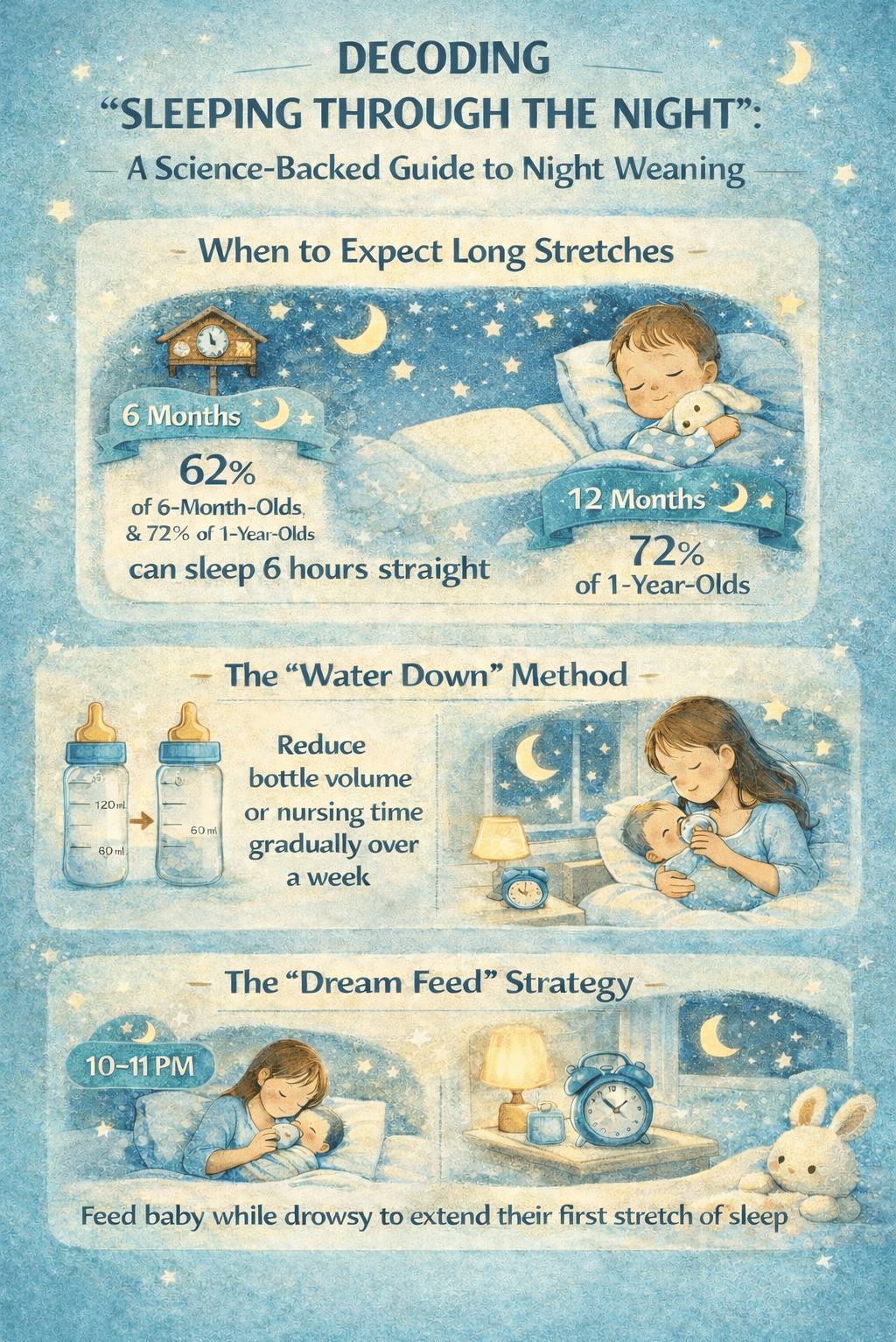
When to Expect Long Stretches
It is unrealistic to expect a newborn to sleep through the night because their small stomachs require frequent feedings. However, by 6 months of age, approximately 62% of infants can sleep 6 hours straight.
By 12 months, the number of babies unable to sleep through drops to about 28%, meaning the vast majority of one-year-olds are biologically capable of a long stretch.
The "Water Down" Method for Night Weaning
By 6–9 months, most babies begin consuming more daytime calories and solids, meaning they no longer strictly need to eat at night. If your baby is still waking out of habit, a gradual approach is more effective than "cold turkey".
• For Bottle-Fed Babies: Reduce the volume of milk by roughly 30–60 mL (1–2 ounces) every few nights.
• For Breastfed Babies: Shorten each nighttime nursing session by a few minutes every night. Over a week or more, these small reductions signal the baby’s body to eat more during the daytime and need less at night.
The "Dream Feed" Strategy
To help bridge the gap between your baby’s bedtime and your own, consider a "dream feed" at 10–11 PM. This involves feeding the baby while they are still in a drowsy state before you go to sleep yourself. This "top-off" can often lengthen that first stretch of night sleep, allowing both parent and child to get more rest before the next waking.